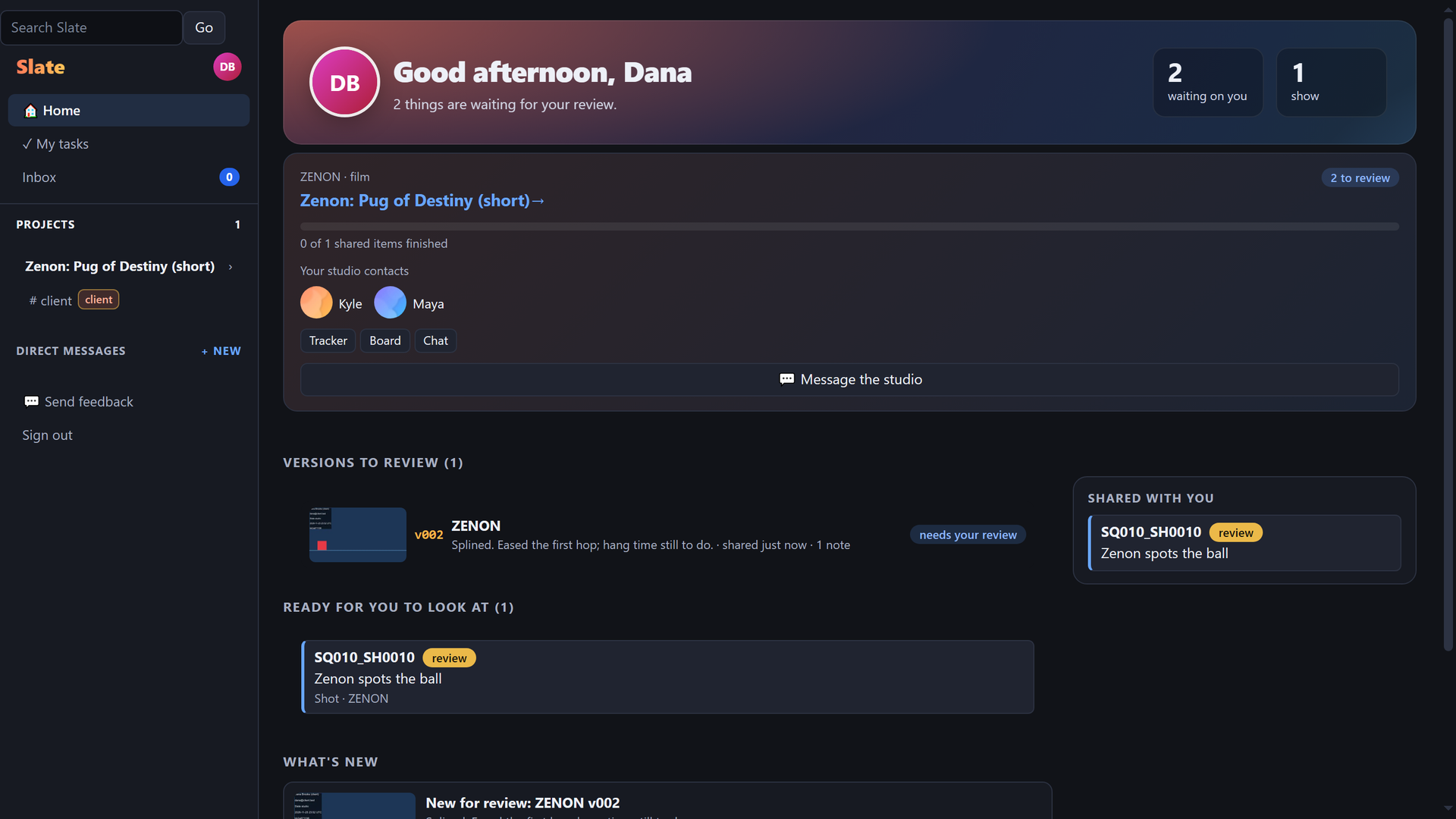
Review the actual Unreal scene, not just a flat render.
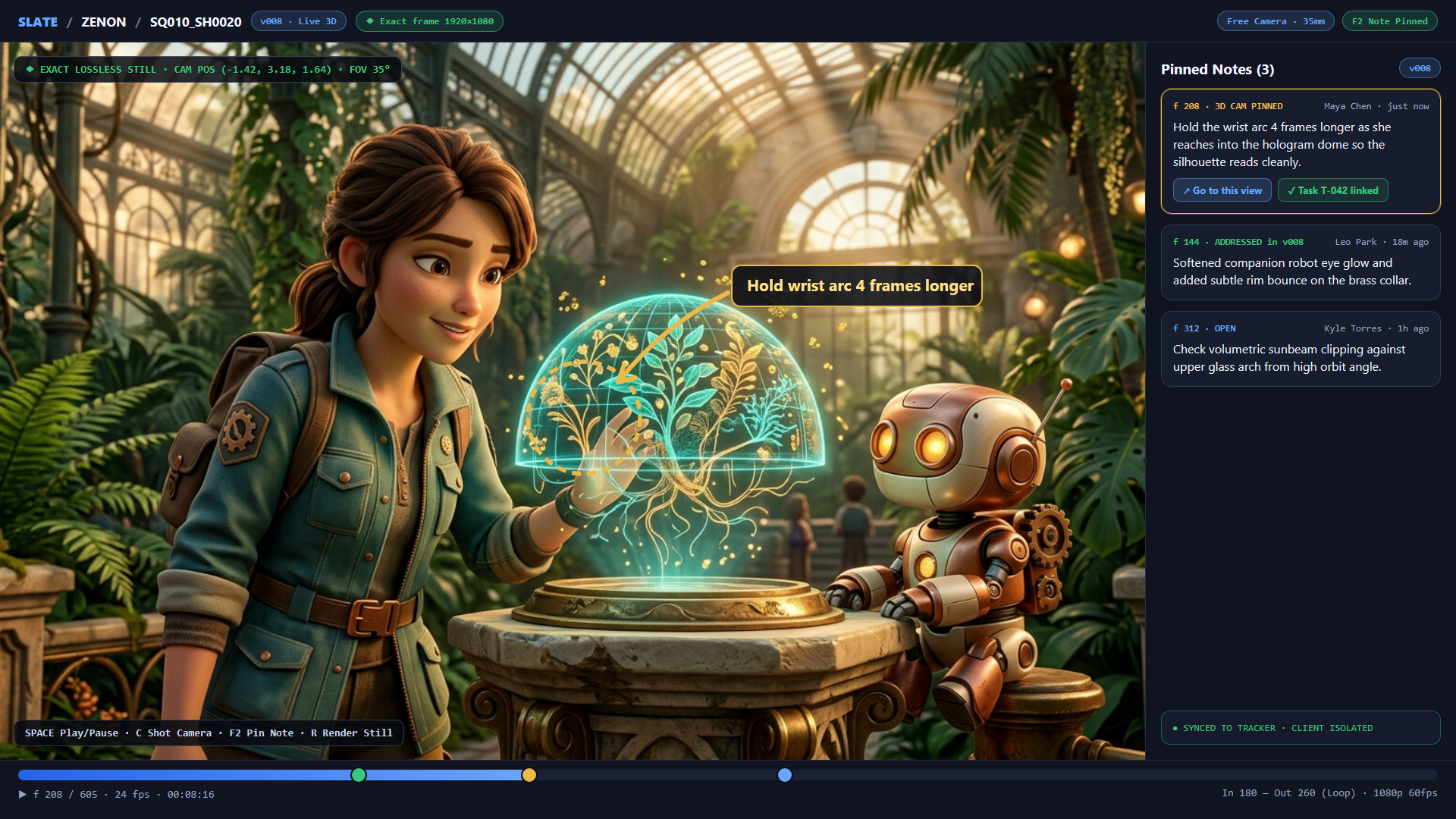
Scrub the live shot in the browser
Play, pause, step frame-by-frame, and loop ranges directly on the Unreal Level Sequence — nothing to install, source files stay on the studio machine.
Fly around the pose before cameras lock
Detach from the shot camera mid-playback to inspect the back of a rig, hand contact, or set intersections — then press C to snap straight back.
One-click return to the exact view
Pausing swaps in the lossless PNG frame. Pressing F2 pins the note to that version, frame, and 3D camera transform so the animator lands on the exact angle.
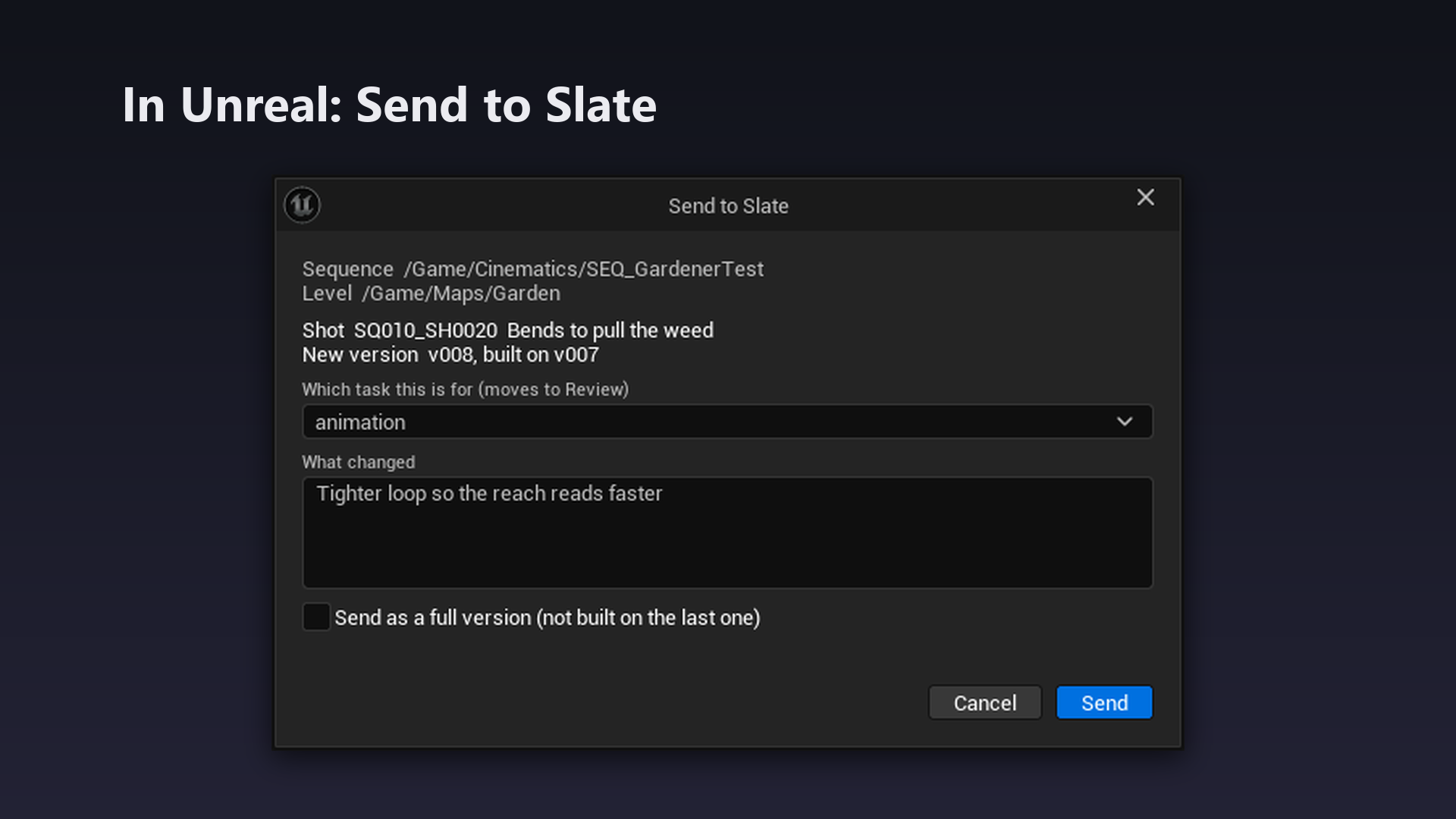
One button in Unreal. Live in Slate in ~1 minute.
Explicit sequence-to-shot mapping
No filename guessing. The Unreal toolbar plugin reads the active Level Sequence and knows it maps to SQ010_SH0020.
Delta cook & tiny incremental upload
Cooks on the artist machine against the baseline player and uploads only what changed — as small as a few kilobytes for an animation tweak.
Automatic tracking & reviewer alert
Publishes v008 on the shot, moves the artist's task to Review, and notifies authorized staff (never clients) with a direct link.
Tracking built for how productions actually move.
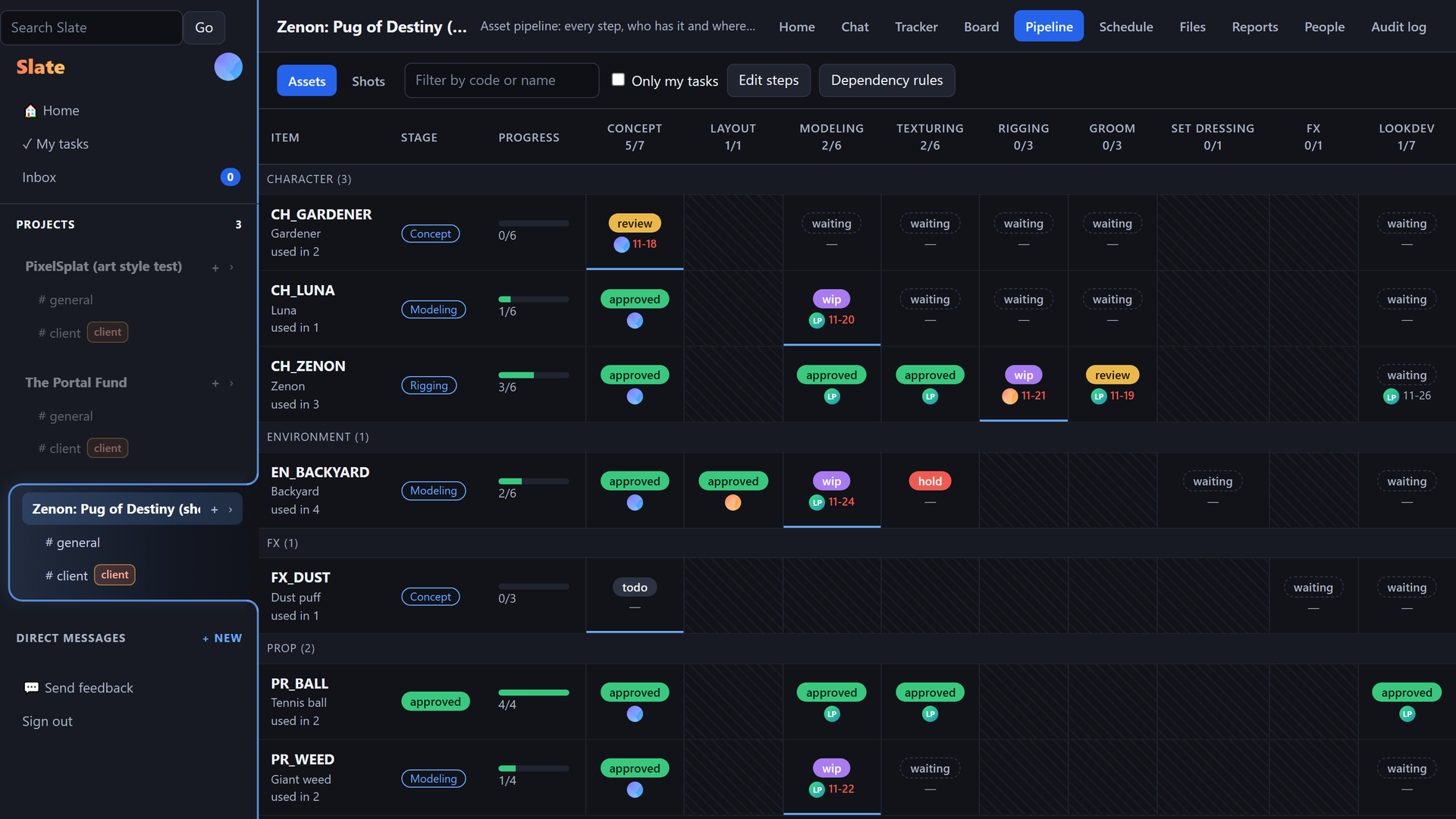
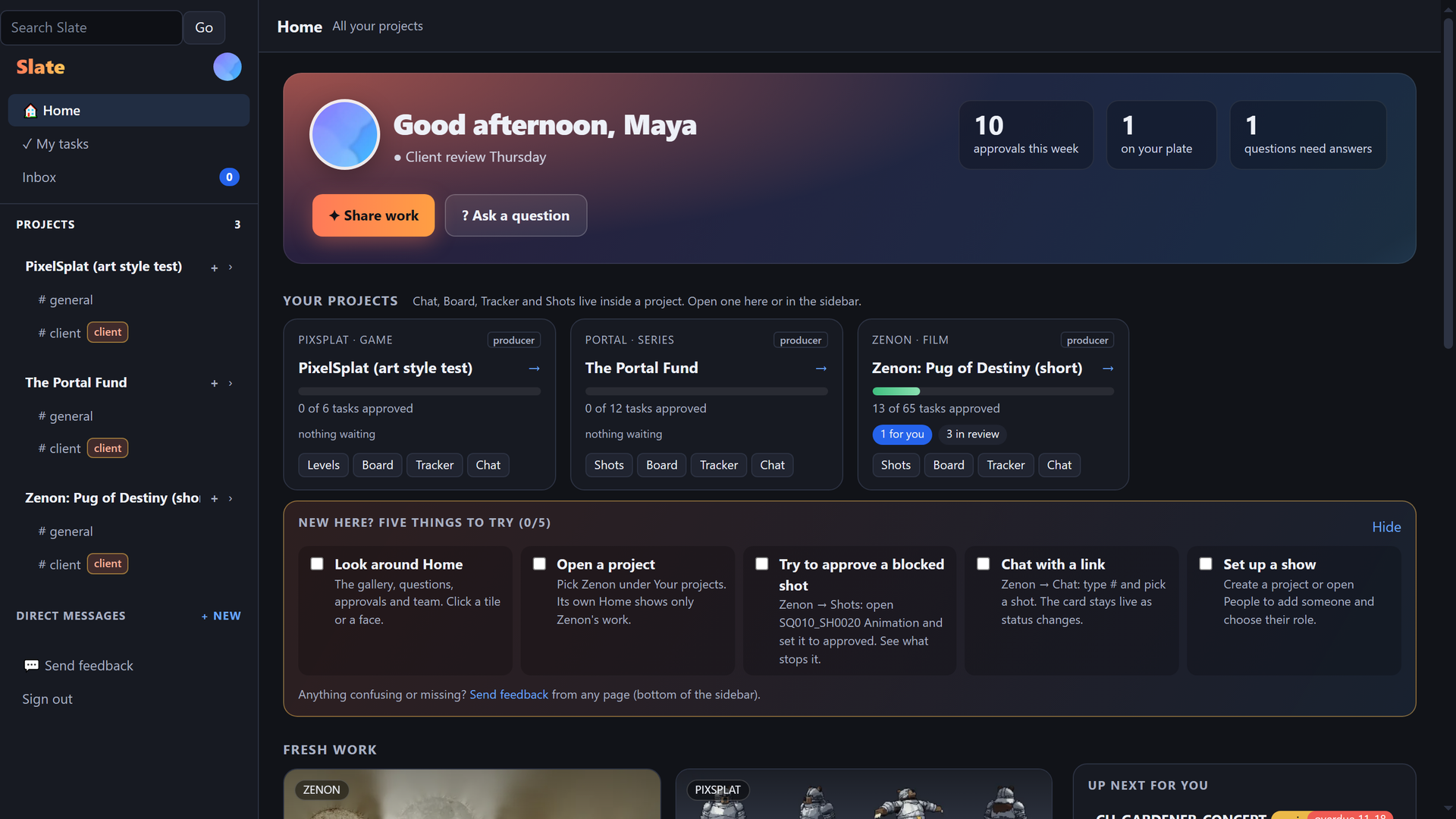
Dependencies enforced in plain English
Every asset, shot, level, or feature breaks into ordered department steps with clear status pills, overdue flags, and dependency locks.
- ✓Shots list the assets they use; animation sees immediately when a rig is approved
- ✓Hard locks block premature sign-off; producer overrides are logged to the audit trail
- ✓Per-project customizable steps for Film, Series, and Game templates
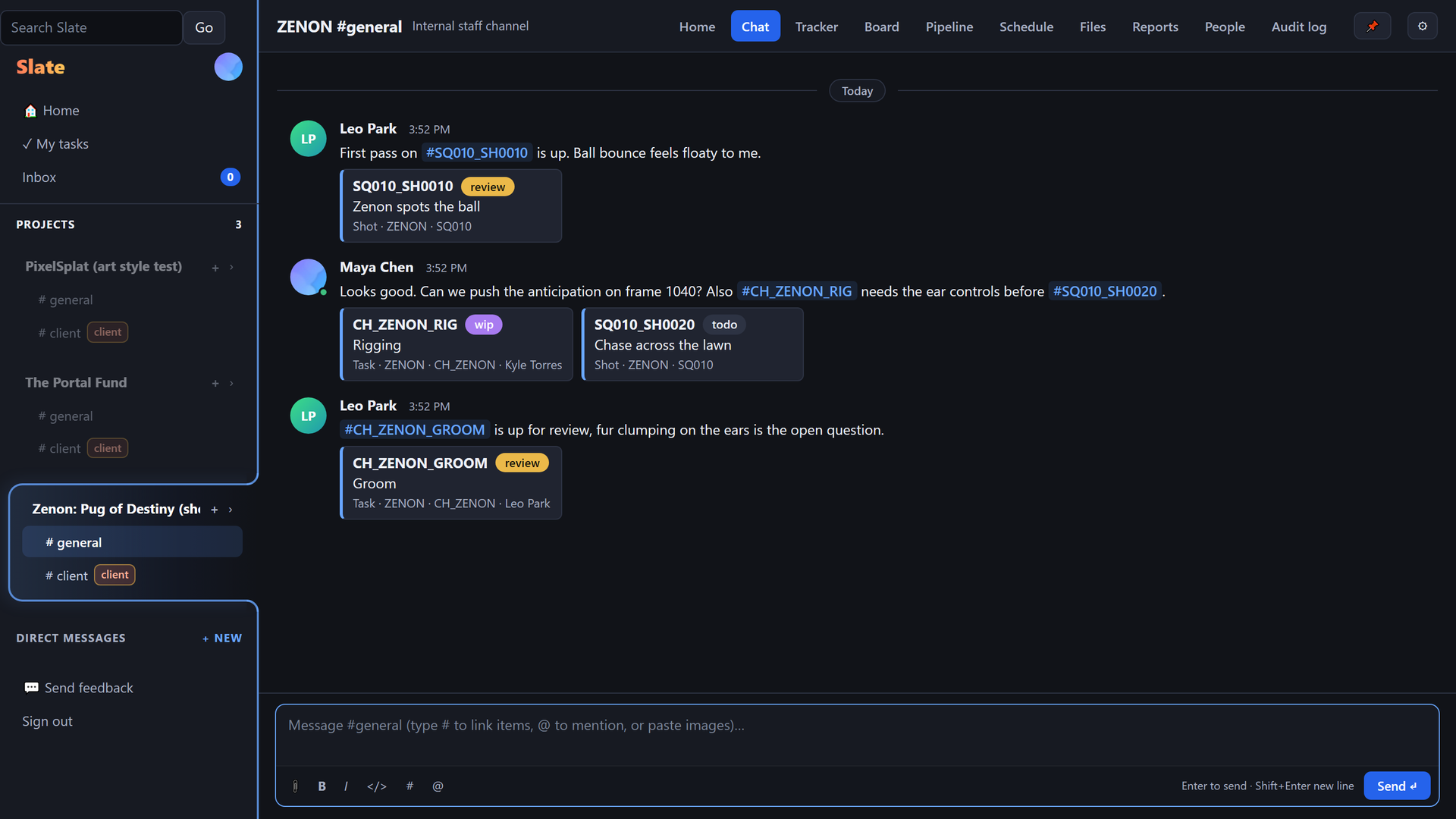
Fast studio chat where every link stays live.
Draw-overs, onion skins, and 3D Pose Pins.
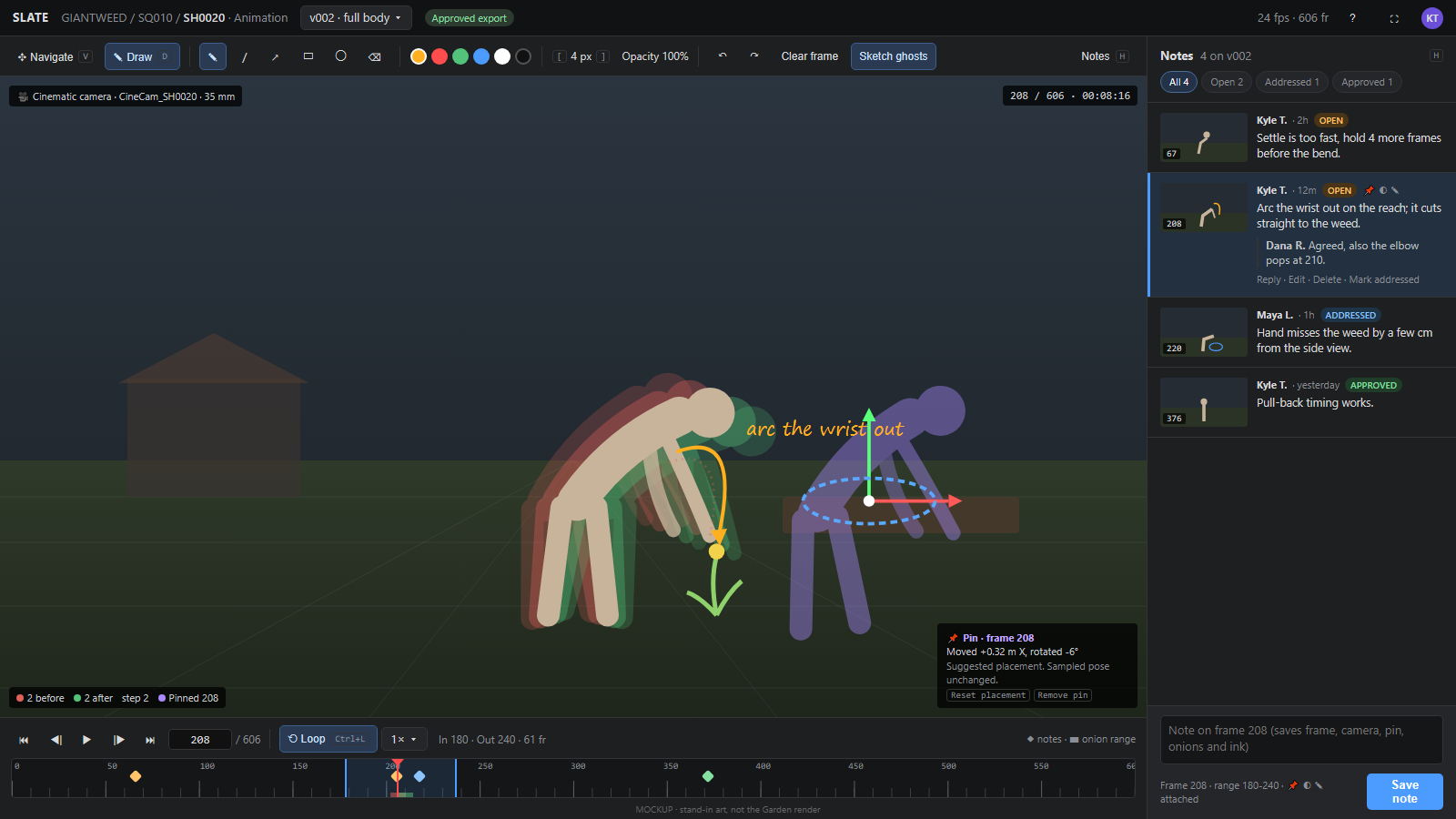
SyncSketch-grade frame tools
Navigate vs. Draw modes, multi-frame onion skins (tinted before/after), sketch ghosting, in/out range looping, and A/B wipe compare.
Immutable 3D Pose Pin
Freeze a translucent 3D ghost at frame 208, scrub to contact, and drag a suggested placement or wrist reach — saved with the note, never altering source keys.
Exact note restoration
Clicking any note in the side panel restores the exact frame, camera view, pin transform, onion skins, and drawn strokes.
One portal for clients. Zero internal leakage.